
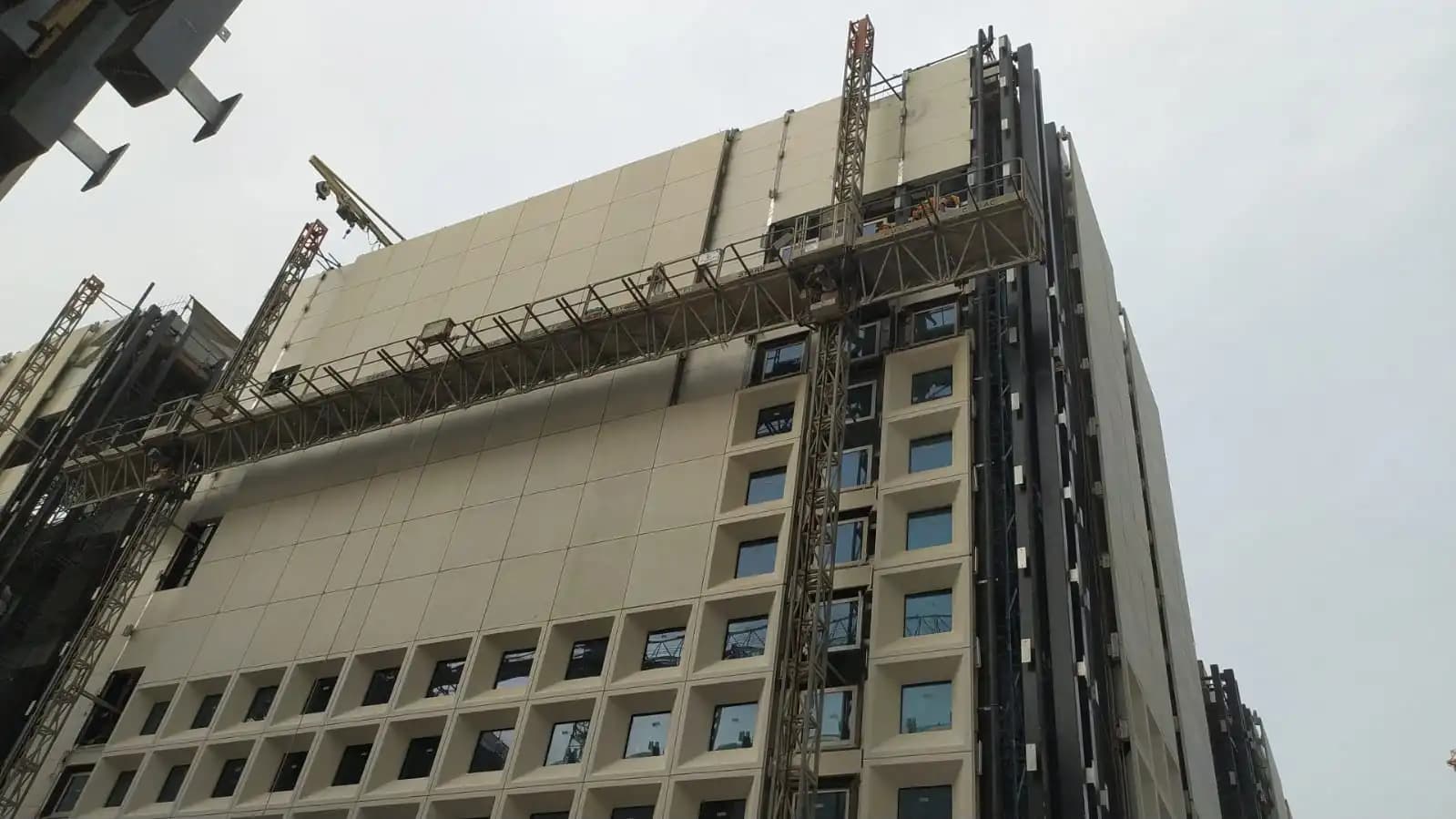
Mast climber project planning in Jeddah

Now accepting project enquiries

Mast Climber Rental & Installation in Jeddah

NABK is accepting mast climber project enquiries in Jeddah for coastal high-rise buildings, hotels, facade refurbishment, glazing, and exterior finishing. Equipment availability, mobilization, and service scope are confirmed after reviewing each project.

Jeddah project planning

From site requirements to mobilization

NABK is a Qatar-based specialist expanding its project coverage to Jeddah. We do not claim a local office or completed city projects; every opportunity is assessed against technical, logistics, and compliance requirements.

  1. 01

    Project information

    Building height, facade length, payload, programme, location, and type of work.

  2. 02

    Technical review

    Platform configuration, mast arrangement, ties, power supply, and access requirements.

  3. 03

    Mobilization plan

    Equipment availability, transport, installation, inspection, and local site requirements.

  4. 04

    Proposal and delivery

    A defined technical and commercial scope followed by coordinated delivery and support.

Project planning guide

When does a mast climber suit a Jeddah project?

A mast climber is practical when a project needs a stable working platform that travels vertically along a building facade. This can support coastal high-rise buildings, hotels, facade refurbishment, glazing, and exterior finishing. Workers can keep tools and selected materials close to the work face instead of repeatedly moving through a full-height scaffold. Suitability depends on building height, facade geometry, platform length, payload, programme, and the space available for the base and access zone.

The equipment should not be selected only because a building is tall or because a similar project used it. A technical review should compare mast climbers with conventional scaffolding, suspended platforms, and other access methods. Productivity, safety, project duration, vertical movement, material handling, and changes in elevation all affect the decision. Jeddah's coastal environment makes wind planning, corrosion awareness, facade geometry, and reliable maintenance especially important.

Information needed for a useful technical review

A useful assessment begins with facade drawings, elevations, sections, and the project location in Jeddah. NABK also needs the working length, target height, expected payload, number of workers, and the materials intended for the platform. Site photographs, ground-floor plans, entrances, internal roads, and unloading restrictions help the team understand delivery, assembly, crane access, and storage requirements.

The work activity must be identified clearly. Glazing, aluminium cladding, stone installation, painting, remediation, and maintenance place different demands on platform dimensions and load distribution. Information about electrical supply, available lifting equipment, start date, working hours, main-contractor rules, occupied areas, and public interfaces allows the proposed scope to be more accurate and reduces late changes.

Platform, mast, and tie planning

Technical planning determines whether a single-mast or twin-mast arrangement is appropriate, together with platform length, final travel height, payload, and landing positions. The configuration should give teams practical access without exceeding equipment limitations or creating uneven loading. Balconies, setbacks, openings, podiums, projections, and changes in facade level must be reviewed rather than treated as standard details.

Building ties require an engineering review connected to the structure and facade sequence. A generic tie spacing or connection detail cannot simply be applied to every building. Proposed positions must be coordinated with the engineer and contractor before installation. Changes to height, loading, platform extensions, or facade conditions should be reviewed and recorded before the equipment configuration is altered on site.

Mobilization and delivery to Jeddah

NABK is based in Qatar, so mobilization to Jeddah is planned individually. The review covers the availability of drive units, mast sections, ties, platforms, controls, safety devices, and suitable spare parts. Transport, border or customs arrangements, insurance, unloading, temporary storage, and the installation sequence may also affect the programme. A fixed delivery promise is not published before the required system and project dates are known.

The contractor should provide a safe unloading and assembly area, suitable truck access, and lifting support where required. Early coordination helps prevent equipment from waiting at the site or conflicting with other trades. The proposal should state what NABK supplies and what remains the client's responsibility, making the price, programme, exclusions, and coordination points understandable before an order is placed.

Installation, inspection, and safe operation

Installation must be completed by competent personnel in accordance with manufacturer instructions, the approved project plan, and the agreed method statement. Typical activities include base preparation, mast and platform assembly, tie installation, safety-device checks, and operational testing before handover. Inspection records should identify the approved configuration, payload, operating limits, and responsibilities for use and supervision.

The project needs scheduled inspections, a documented maintenance process, and a clear procedure for stopping operation if unsafe conditions arise or wind exceeds approved limits. Users require instruction on access, material distribution, overload prevention, housekeeping, and emergency response. Final obligations depend on local requirements, the main contractor, the equipment manufacturer, and the project safety plan; this webpage is not a substitute for site-specific engineering or safety documentation.

What determines the rental price?

There is no single rental figure that applies to every project. Cost is influenced by the number of machines, single- or twin-mast configuration, travel height, platform length, payload, and rental duration. Tie quantities, engineering work, transport, installation, dismantling, inspections, maintenance attendance, spare parts, inductions, permits, and work outside normal hours can also change the commercial scope.

For a realistic Jeddah quotation, technical information is more valuable than a request for a general monthly rate. The cheapest unit may not meet the facade geometry, loading, or productivity requirement. A proper comparison considers total project cost, labour, installation time, programme benefit, and service coverage. Assumptions, exclusions, client responsibilities, and optional support should be stated clearly in the final proposal.

How to start an enquiry with NABK

Send the project name, Jeddah location, construction stage, and technical contact details. Attach facade elevations, a building section, site photographs, target height, desired platform length, expected payload, and the required start date. If every document is not yet available, an initial review can begin with basic dimensions, followed by the remaining information before a firm technical and commercial proposal is issued.

NABK will identify technical questions, prepare an initial configuration, and explain whether a site assessment or further engineering information is required. Equipment availability, mobilization, installation, maintenance, and support can then be confirmed. This process is intended to produce a deliverable solution—not simply attach a city name to a generic offer or promise local availability before the project requirements are understood.

Regional project coverage

Explore mast climber services by location

NABK accepts project enquiries from Saudi Arabia and the UAE, with mobilization and service scope confirmed for each project.

Planning a project in Jeddah?

Send the drawings, height, facade length, required payload, location, and programme to begin a technical review.